Unipart manufacturing expert calls on the UK to maximise the redrawing of global manufacturing lines
One of the UK’s leading industrialists believes the UK is standing on the verge of a pivotal opportunity that could see it ‘redraw’ the global manufacturing landscape.
Carol Rose Burke, Managing Director of Manufacturing, Engineering and Design at Unipart, believes the country needs to be bold and brave in its approach to embracing cleaner mobility, greener engineering and emerging markets.
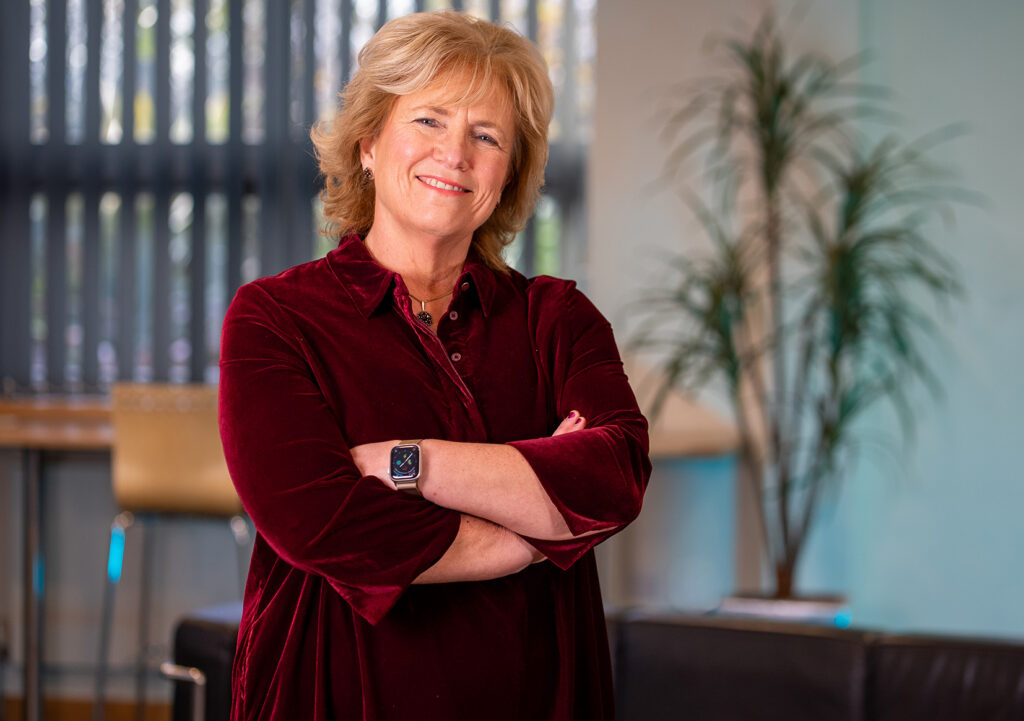
Carol Rose Burke, Managing Director of Manufacturing, Engineering and Design at Unipart
Speaking ahead of the SMMT International Automotive Summit next week, the high-profile CBE wants government, trade bodies, academia, OEMs, primes and suppliers to work closer together to commercialise more innovation in the country.
She feels the UK has untapped, deep domestic capability across entire supply chains – components, systems, electrification, engineering, advanced manufacturing and industrialisation.
“If better connected to demand in multiple sectors, this could contribute significantly to growth…it is currently a major missed opportunity,” explained Carol, who has been in industry for more than four decades.
“Demand signals from OEMs matter. Suppliers can invest, scale and innovate, but they need clearer long-term signals from OEMs and government to justify the capital and capability required to support the UK’s desire to reach 1.3m vehicle production by 2035.
“If we invest in both capacity and capabilities, then we can be as competitive as any country – especially when you factor in the actual ‘landing price’ of parts if sourced overseas.”
She continued: “This is driving reshoring opportunities…it’s early days, but there’s a shift in momentum. We’re already seeing examples at Unipart where existing and new customers are bringing projects back home, quoting a desire for shorter, more secure supply chains that deliver both operational and environmental benefits.”
Carol started her industrial career at British Steel, before joining GKN and moving to Unipart in 1994.
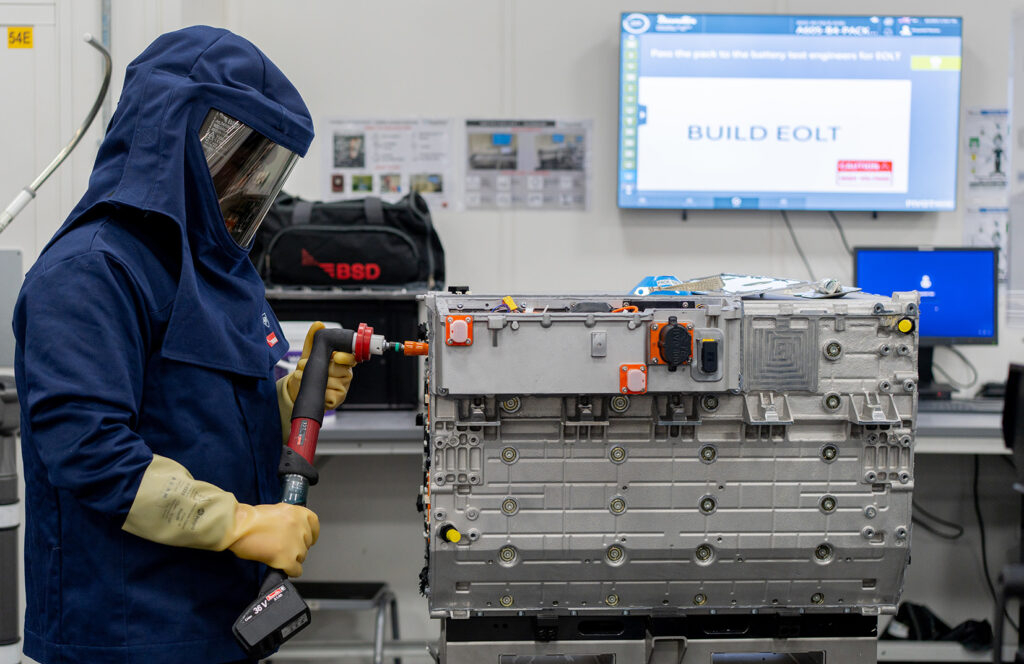
Over the next three decades, she has been involved in some of the organisation’s biggest milestone moments, driving its involvement in the groundbreaking Institute for Advanced Manufacturing and Engineering (AME) and supporting the integration of battery specialist Hyperbat into the Unipart family.
She has also played a key role in overseeing the recent transformation of Design, Engineering and Manufacturing within the group, which employs 8,500+ colleagues and records annual sales of over £1bn.
There is now a much wider view at the organisation that the focus should be on its capabilities, processes and what it does well, rather than just being a supplier of services.
Whilst automotive and its journey towards electrification are still core markets, both Unipart’s UK and global operations now target an end-to-end supply chain offer to nine sectors.
“There’s plenty of markets that can benefit from the deep supply chain capability that has been developed in the automotive industry, there’s no doubt about that. There is also increasing demand from industries, such as construction and nuclear, who need to accelerate production quickly,” commented Carol.
“This should equate to a positive opportunity, yet there is a notable industry reluctance to buy from suppliers who are extremely capable but lacking a proven track record in the sector.
“There is a huge amount of capability, knowledge and IP sitting within UK businesses, but many are not yet at the size or scale needed to take products into full commercial delivery, particularly in sectors like defence where demand is growing quickly.
“Funding must be tied more clearly to UK industrial outcomes. We can support R&D and innovation, but unless there is a stronger route to commercialisation and domestic production, there is a risk that publicly supported innovation is developed here and then scaled elsewhere.
“That’s where businesses like Unipart can play an important role in joining the dots, helping to industrialise and commercialise cutting-edge ideas so they become real production capability in the UK.”
As a Board Member at the Society of Motor Manufacturers and Traders (SMMT), Carol is firmly pushing for investment decisions that deliver long-term certainty.
She is adamant that the UK must remain competitive on energy, skills and speed to market if it wants to attract sustained funding and scale industrial capability domestically.
“One of the biggest risks today is losing supplier capability through distress or under-investment, particularly as global disruption continues to expose reliance on overseas supply chains.
“We are seeing this on the ground, with several UK suppliers at threat of going under. This collective expertise and knowledge would be a huge loss to the industry, and we can’t let this happen. With this in mind, we are currently exploring potential acquisition opportunities to secure the future of these skills and abilities for decades to come.”
Carol concluded: “My passion for the future is based on the UK having an opportunity to reshape its own manufacturing future by redrawing our supply chain capability. We just need to be confident in what we do well, back it by all means necessary and shout about it whenever we get the chance to do so.”
For further information, please visit www.unipart.com