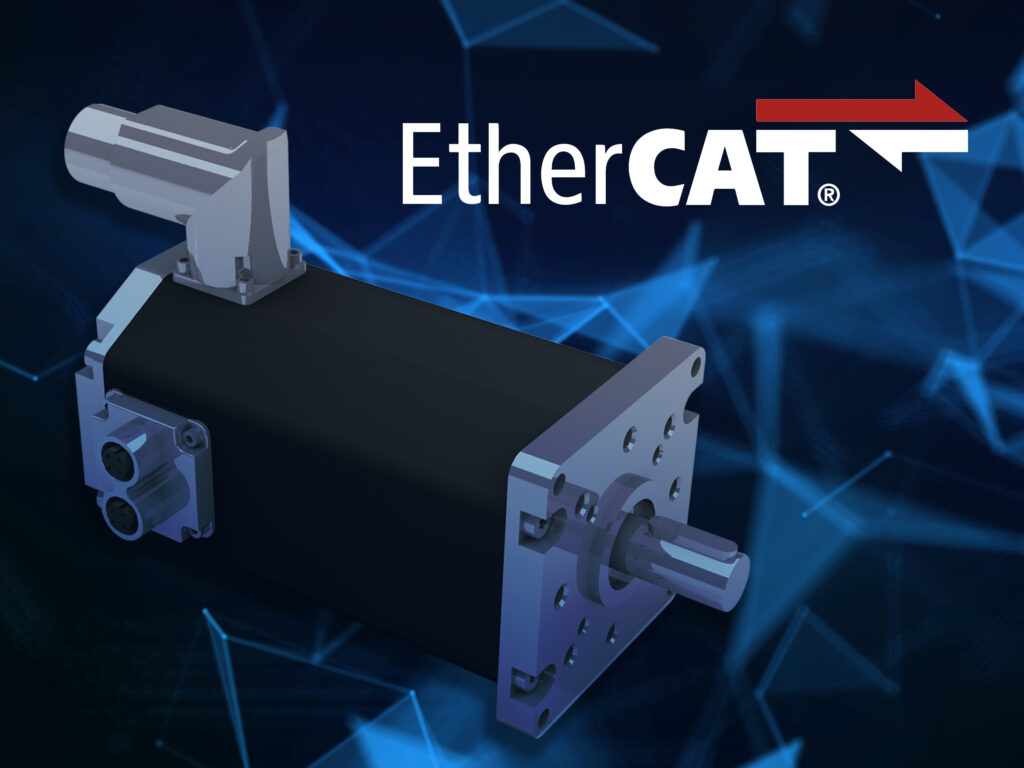
Scalable EtherCAT solutions from 10 to 5000 watts help OEMs reduce complexity, improve synchronization and optimize machine design
Modern automation systems require fast communication, precise synchronization and compact machine architectures. Especially in multi-axis applications, drive systems must exchange data reliably in real time while remaining easy to integrate, commission and scale. Dunkermotoren addresses these requirements with a broad EtherCAT-capable drive portfolio, offering both integrated smart servo motors and modular motor-controller combinations for flexible machine concepts.
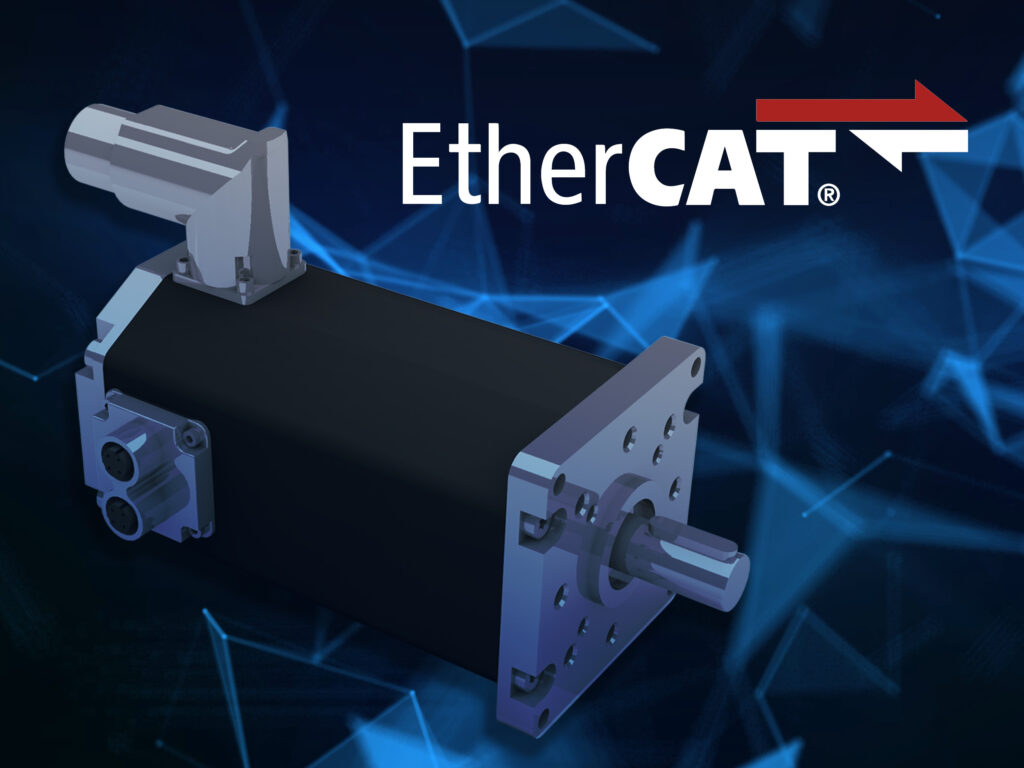
With EtherCAT interfaces available across its dPro drive platform and compatible external controller solutions, Dunkermotoren enables deterministic motion control for demanding industrial applications. The portfolio covers scalable power requirements from 10 to 5000 watts and supports machine builders in implementing compact, high-performance drive systems tailored to their individual automation architecture.
Flexible Architectures: Integrated or Modular by Design
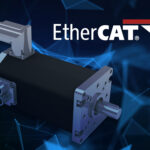
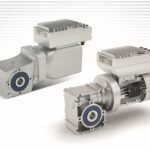
Depending on the machine concept, Dunkermotoren offers two main EtherCAT architecture paths. Integrated dPro drives combine motor, encoder, drive electronics and EtherCAT interface in one compact housing. This all-in-one concept is particularly suitable for decentralized automation systems where cabinet space is limited, wiring effort must be reduced and intelligence is required directly at the drive level.
For applications requiring a split architecture, Dunkermotoren’s dCore motors can be combined with external EtherCAT controllers such as the BGE 5510 dPro EC. This setup is especially useful when control electronics need to be separated from the motor due to high vibration, demanding thermal conditions or machine layouts based on centralized cabinet concepts.
This dual approach provides maximum design freedom, enabling OEMs to align drive architecture precisely with mechanical constraints, environmental conditions and system layout.
Real-Time Communication as a Productivity Driver
EtherCAT plays a critical role wherever synchronized motion and deterministic behavior are required. Its ability to deliver short cycle times and minimal communication jitter enables highly precise coordination between multiple axes. Dunkermotoren drives support established motion control profiles such as CANopen over EtherCAT and CiA 402, making integration into existing control environments straightforward and reducing commissioning effort.
In practice, this level of synchronization directly influences machine performance. In packaging and labeling applications, it ensures accurate positioning, cutting and product handling. In sorting or shuttle systems, it enables higher throughput through precise timing. In material handling, it stabilizes processes even under dynamic start-stop conditions. For machine builders, real-time communication therefore goes beyond connectivity—it becomes a key lever for improving output, consistency and overall process reliability.
Reducing System Complexity Through EtherCAT Integration
In addition to performance benefits, EtherCAT helps simplify machine design. By using standard Ethernet cabling in a daisy-chain topology, complex wiring structures can be significantly reduced. The elimination of separate communication layers and feedback systems not only lowers hardware requirements but also minimizes potential sources of error.
This simplification becomes even more visible in integrated drive concepts. With drive electronics embedded directly into the motor, the need for additional servo drives in the control cabinet is reduced or eliminated. The result is more compact machine layouts, shorter installation times and lower overall system complexity.
Access to Data Without Interrupting Operation
Modern automation increasingly relies on transparency and data availability.
Dunkermotoren enables access to drive parameters, status information and diagnostics via Ethernet over EtherCAT without interrupting real-time communication.
This allows engineers to analyze performance, adjust parameters and identify potential issues directly through the existing network infrastructure. During commissioning, this capability accelerates setup processes. In operation, it simplifies troubleshooting and helps reduce downtime.
The ability to maintain full system visibility without compromising performance adds an important layer of efficiency to complex automation systems.
Integrated Safety Supporting Compact Designs
Safety requirements continue to grow in importance, particularly in highly automated environments. Dunkermotoren addresses this with Safe Torque Off (STO), implemented as a standard hardware feature across its EtherCAT solutions.
By integrating safety directly into the drive, machine builders can reduce the need for external components and design more compact safety concepts. This not only simplifies compliance with safety standards but also supports more efficient system layouts without adding unnecessary complexity.
Proven Across Demanding Automation Applications
The advantages of EtherCAT-based drive architectures become especially clear in realworld applications. In autonomous mobile robots and automated guided vehicles, compact integrated drives enable precise motion control while optimizing space and energy usage. In warehouse automation, fast communication supports responsive and high-throughput sorting and shuttle systems.
In packaging and labeling machinery, synchronized multi-axis motion ensures stable, repeatable processes, from film handling to positioning and cutting. Across all these applications, the combination of real-time performance, flexible integration and reduced complexity contributes directly to more efficient and reliable machine operation.
“Machine builders today need flexibility without sacrificing performance,” says Andreas Winterhalter, Head of Products at Dunkermotoren. “With our EtherCAT portfolio, customers can standardize on a single communication technology while choosing the drive architecture that best fits their machine concept – whether integrated, modular or a combination of both.”
Dunkermotoren’s EtherCAT drive portfolio demonstrates how modern drive technology can simplify automation while increasing performance. By combining scalable power, flexible architecture and deterministic real-time communication, OEMs can reduce complexity, improve synchronization and design more efficient machines—tailored precisely to their application requirements.