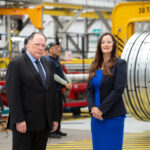
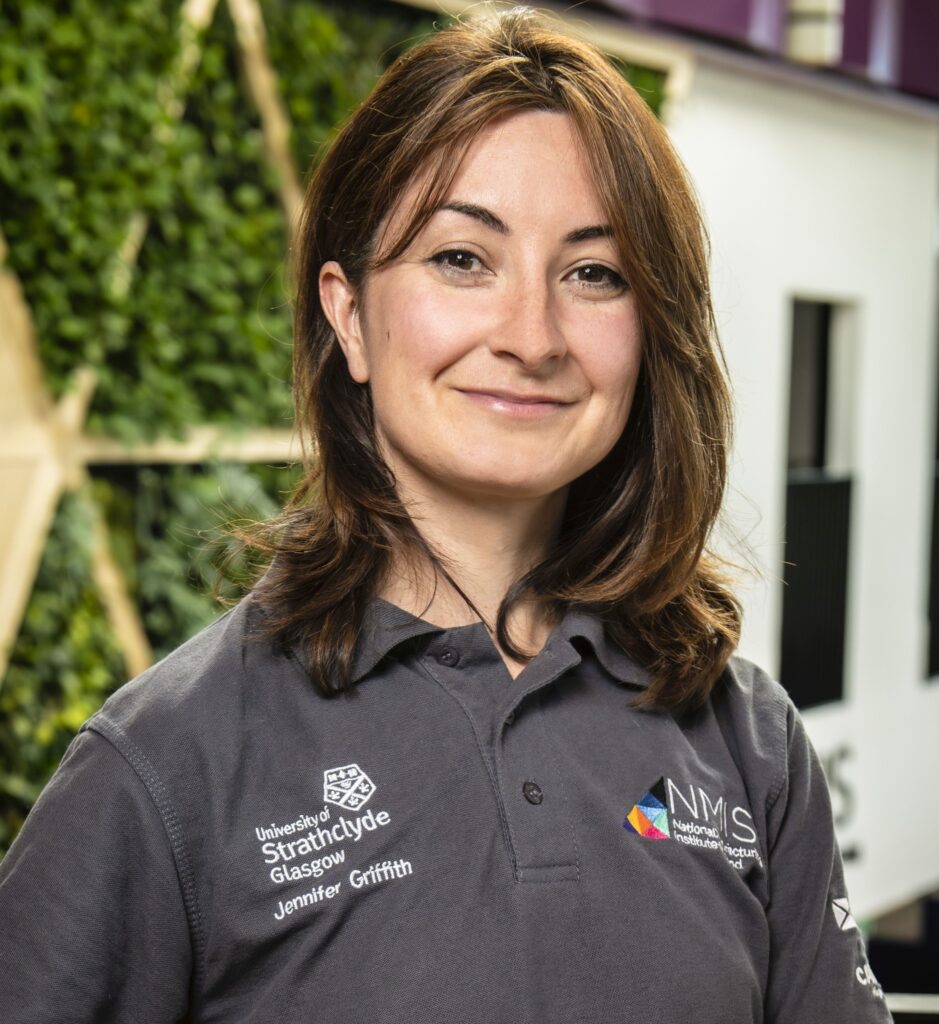
Jennifer Griffith, net zero skills project lead at the National Manufacturing Institute Scotland’s (NMIS) Manufacturing Skills Academy
In the UK, women make up just 28.4% of the manufacturing workforce.[1] While this figure has risen slightly in recent years, it’s a clear reminder that the industry still has a long way to go before it becomes truly inclusive and benefits from a wider talent pool.
To stay ahead of any rapid changes in technology, legislation, and industry priorities, manufacturing must encourage diversity and attract talent from multiple disciplines, especially those in science, technology, engineering and maths (STEM), helping to drive advancements in key areas such as digital transformation and sustainability across high-integrity sectors. However, achieving this requires industry leaders and policymakers to not only rethink the stories they tell about manufacturing, but also the skills, training, and pathways required to make the sector accessible and appealing for all.
Manufacturing has long struggled with an image problem. A recent survey with young people in STEM, led by the National Manufacturing Institute Scotland’s (NMIS) Manufacturing Skills Academy, revealed that the word “factory” still evokes images of grime, noise, and male-dominated environments.[2] These perceptions are not only outdated but limiting, reinforcing the belief that the industry is only welcoming to a narrow demographic. Every job advert featuring a man in a hard hat, every piece of PPE designed for male bodies, and every portrayal of the factory floor as the entire manufacturing experience only deepens this stereotype.
Language and imagery have a powerful impact on perceptions of inclusion. That same report found that the term “digital factory” evokes sleek interfaces, robotics, and smart systems, which is far more appealing job destination for the majority of university students surveyed. When the industry is reframed as high-skilled and tech-driven, the door opens to a broader talent pool. However, changing language alone is not enough. To attract a skilled workforce, marketing and training materials need to showcase women in leadership roles, diverse teams collaborating in smart labs, and inclusive design in everything from PPE to job adverts. The industry is just as much about problem-solving, circularity and digital transformation as it is about physical production, encompassing vital sectors like engineering, design, green skills, leadership, and strategy.
To change outdated perceptions, businesses must showcase the reality of modern manufacturing as a sector that thrives on technology, diversity, and collaboration. Women, for example, bring invaluable perspectives and skills that drive innovation, yet many hesitate to enter the industry because they do not see themselves reflected in it.
Green skills offer a powerful way to reshape this narrative. The shift toward sustainability and green jobs is creating new, high-tech roles that can attract women who might otherwise be deterred by traditional images of factories and male-dominated spaces. Research shows that women are more likely than men to be inspired by careers that combat climate change and deliver positive social impact[3], so highlighting the industry’s role in the transition to net zero can appeal to women seeking purpose-driven work.
By actively promoting environmental agendas and modern, inclusive workplaces, manufacturers can challenge outdated perceptions and signal that they are forward-thinking and responsible. The growing demand for green skills is opening roles in circular manufacturing, renewable energy and sustainable procurement, creating entry points that bypass traditional hierarchies.
A key part of NMIS is the Manufacturing Skills Academy, which offers free online courses in sustainable manufacturing, covering areas such as the circular economy, digital product passports – which are a key enabler for circularity, and remanufacturing. [4] These are not just technical modules, they are low-barrier entry points into a clean, digital, and future-facing sector. For individuals who may feel less familiar with technical environments, these accessible courses offer a practical entry point into clean, digital and future-facing areas of manufacturing.
This approach reflects findings from “Green Jobs in Scotland: An inclusive approach to definition, measurement and analysis” from the Warwick Institute for Employment Research, which stresses the need for inclusive access to green skills so that everyone can benefit from the transition to net zero. The Manufacturing Skills Academy’s report also echoes their findings on the student perceptions of manufacturing, which found that students are often discouraged by the industry’s perceived lack of accessible training pathways.[5]
Many talented individuals are held back by the industry’s perceived lack of clear, accessible skills training. To truly bring manufacturing into the 21st century, its story needs to change and showcase the full spectrum of careers on offer.
The future of the industry isn’t defined by machines – it’s driven by ideas, innovation, and the people who turn them into reality. By investing in diverse talent and modern pathways, manufacturing can evolve into a sector that not only adapts to change but leads it.
Discover how the NMIS ReMake programme and the ReMake Value Retention Centre are helping industry build the skills and capabilities needed for a circular, net-zero future through our ReMake Extension learning series.
[1] Women in UK Manufacturing 2025
[2] Manufacturing Skills Academy – A study into the impressions of young people on manufacturing in Scotland
[3] Climate Change Communication
[4] Manufacturing Skills Academy
[5] Manufacturing Skills Academy – A study into the impressions of young people on manufacturing in Scotland